How Protective Stops Keep You on the Right Side the Trend

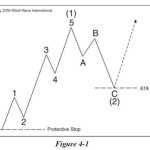
Scuba-diving is a lot like financial markets. Investors and traders jump in — and use an array of safety gauges to keep them on the right side of price action.

Well, at least those investors and traders who use technical market indicators. For them, those bold, red lines indicating the point of danger — those are equivalent to the most critical component of market analysis: protective stops. The second prices cross this line, it’s time to “swim back up to the surface” and safely re-adjust your position.
Stock Market Breadth: Is It Really That Bad?

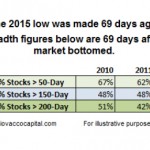
Market breadth speaks to the percentage of stocks participating in a stock market rally. All things being equal, the broader the participation the healthier the market. In this article, we will examine breadth for both the S&P 500 and NYSE Composite Stock Index. We will also examine 2015 breadth vs. similar points after a correction and similar points in a bear market. Stock market breadth is not particularly useful as a short-term timing tool for the S&P 500; it can be helpful on longer-term time horizons.

Retesting Market Lows Seeking Support

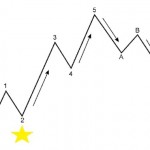
Given the severity of the selloff in stocks in late August, it was not surprising to see the subsequent rally attempts fail. As we noted numerous times in recent weeks, including September 3 and September 17, bottoms tend to be a process.

Why the Japanese Yen’s Bull Run REALLY Ended

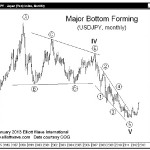
Back in 2012, the yen looked like the strongest monetary unit in the financial universe, standing at an all-time record high against the mighty U.S. dollar, the world’s “reserve” currency. Flash ahead to now (circa September 2015), and the yen is down 30% whilst clinging to its lowest level against the dollar in 12 years. So, what changed?

Global Stocks Slide

“When the alarm goes off and the dreamers awake, it will be pandemonium in the stock market.” — Bob Prechter

Greece: What Do Investors Need To Know About Risk?

Greece’s biggest newspapers called on readers to vote “Yes” in Sunday’s referendum that could determine whether the country stays in the euro. European leaders say a ‘No’ vote will jeopardize the euro. Prime Minister Alexis Tsipras says they are bluffing, what do investors need to know?

The U.S. Dollar’s 2014-2015 Rally

Let’s look at the 2014-15 Dollar rally and how the Elliott Wave Principle applies to Currencies and Foreign Exchange (Forex). I always say trading forex markets is like riding a bike — except that said bike has one flat tire and the ground beneath it is covered in ice.

So why is Forex so popular, you might ask? In fact, forex is the most liquid market on earth, where trillions of dollars change millions of hands every day.

The reason people are so willing to ride that bike — so to speak — is because if you can stay on, the rewards are often unmatched. The trick, of course, is staying on.

What Stock Market Bulls Might Be Overlooking- Video

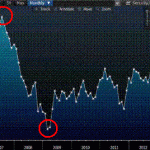
A growing economy is not necessarily bullish — see for yourself. If a strong economy means a strong stock market, then stocks should have continued higher in 2007 when GDP expanded at 2.7%, unemployment was 4.6% and Consumer confidence was very strong, . They didn’t, instead the Dow fell more than 50% over the next year and a half:

Economic Cycles of Energy and Technology

Everything moves in cycles whether it is the price of a barrel of oil, the overall stock market, real estate or technology. So where is it heading from here? Are we in for a boom or a bust? That is always the key question. Is it time to be skeptical of the markets, bullish on gold, or does the stock market hold the key? In today’s article Jared Dillan editor of Bull’s Eye Investor, takes a look at where we’ve been and where we are going.

Market Trends Diverging

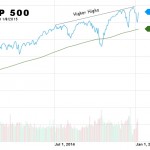
Today we are going to take a look at two common stock market charts that individually tell opposite stories but when combined give us an interesting insight into the overall market. The first chart is the S&P 500. As I’m sure you are aware the S&P 500 represents Standard and Poor’s top 500 companies.